Source Unknown
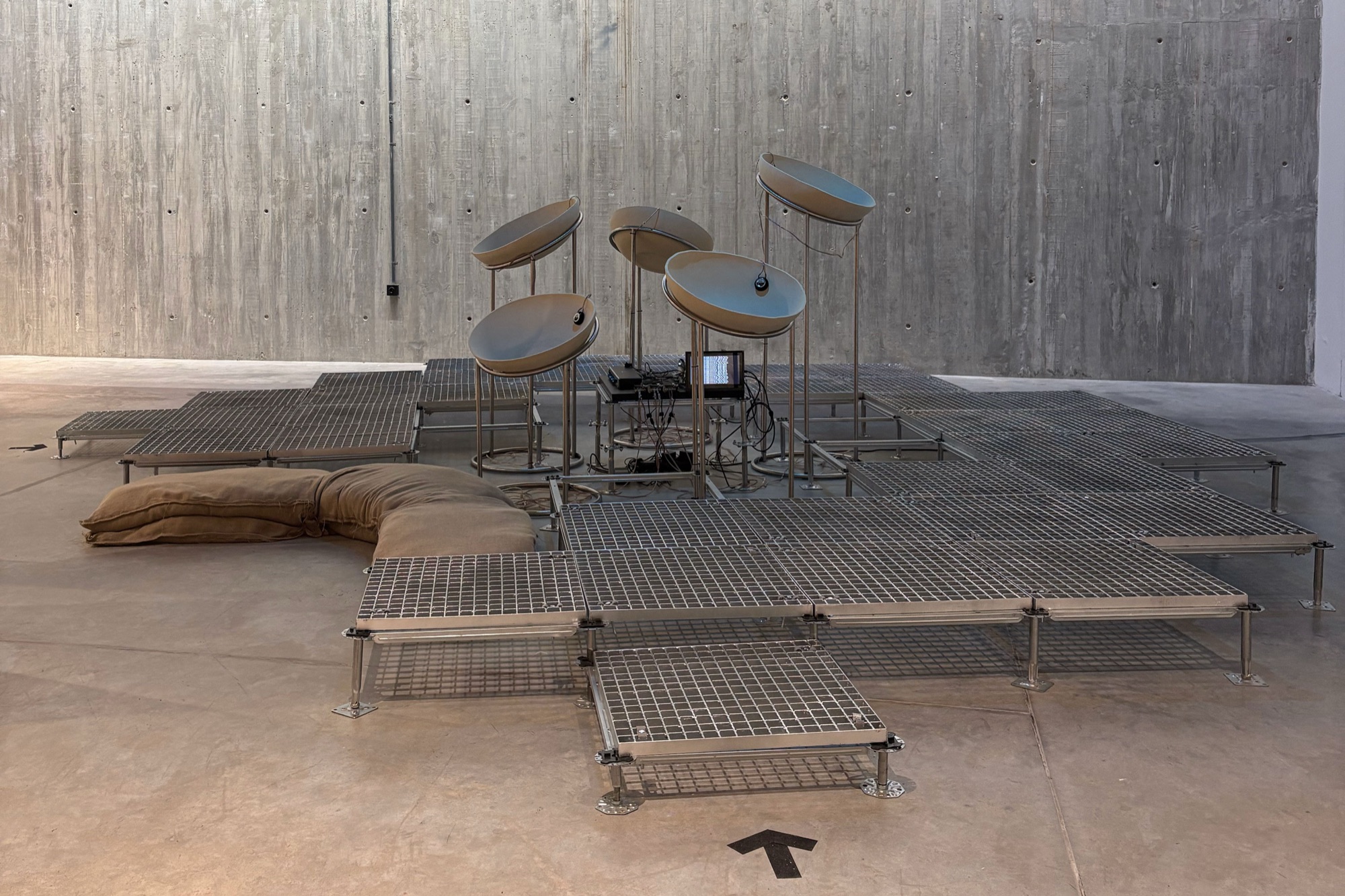
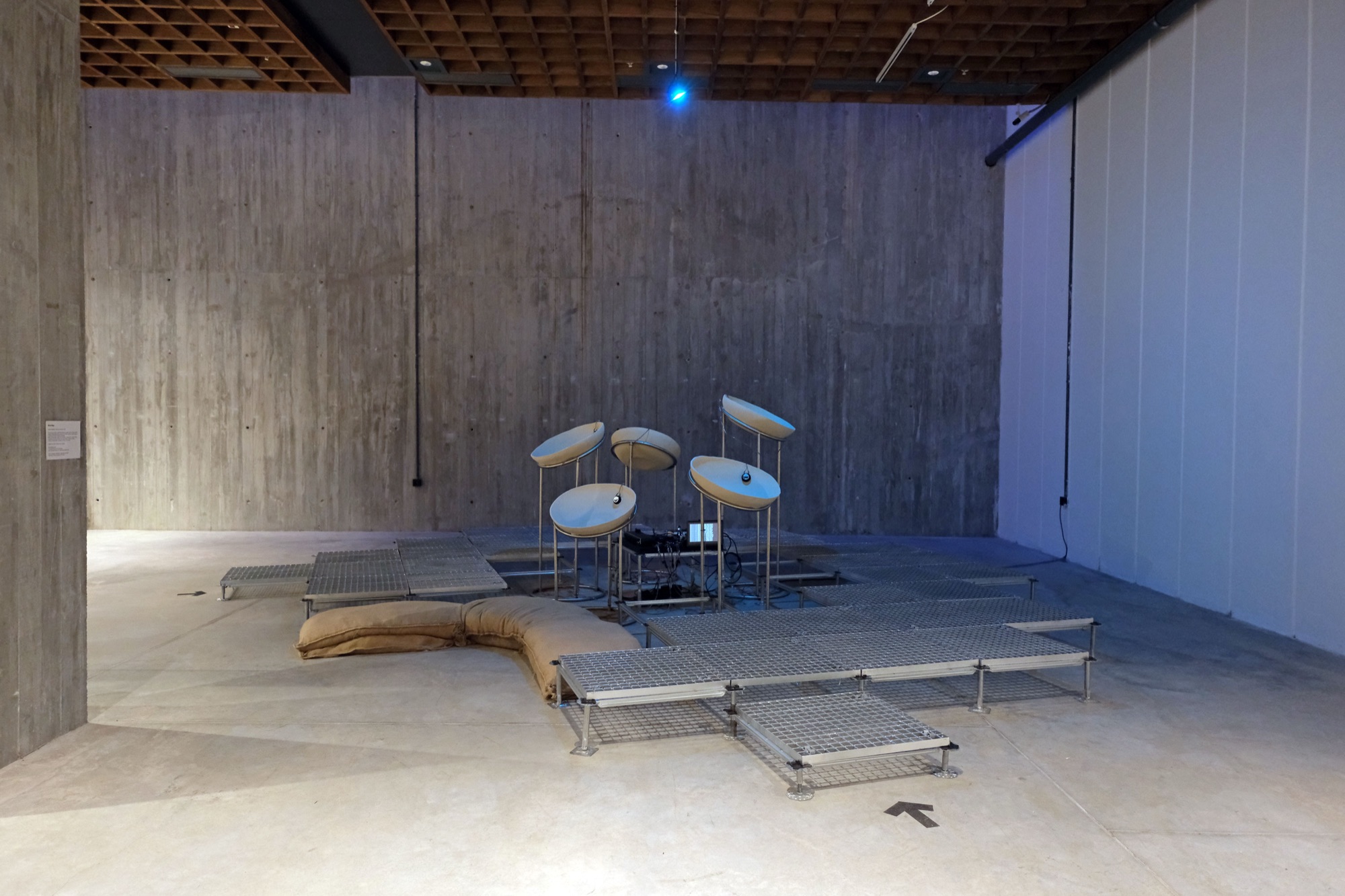
The installation traces the transformation of archaeological material as it moves from physical excavation into digital infrastructures, where it is fragmented, reformatted, and recirculated as data, signal, and noise through a continuously generated sonic environment.
TEXTTEXT
Developed site-specifically for the Troy Museum, Source Unknown traces the trajectory of archaeological material—a journey that begins with excavation but does not end at the excavation site. The work considers how archaeological objects are reformatted, multiplied, and circulated across digital infrastructures through reconstruction software, museum databases, virtual environments, and digital heritage platforms. By bringing Sumerian creation narratives, in which the human body is shaped from clay, into proximity with the water-dependent infrastructures of contemporary data centers, the work establishes a material relation between ancient cosmologies and contemporary technological systems.
While an archaeological object retains a certain degree of material integrity as it circulates physically, its transfer into digital environments entails a different kind of transformation: it is fragmented into data, records, models, and reproducible representations. Source Unknown renders this fragmentation and uncertainty produced by digital transmission visible—or, more precisely, audible—through sound.
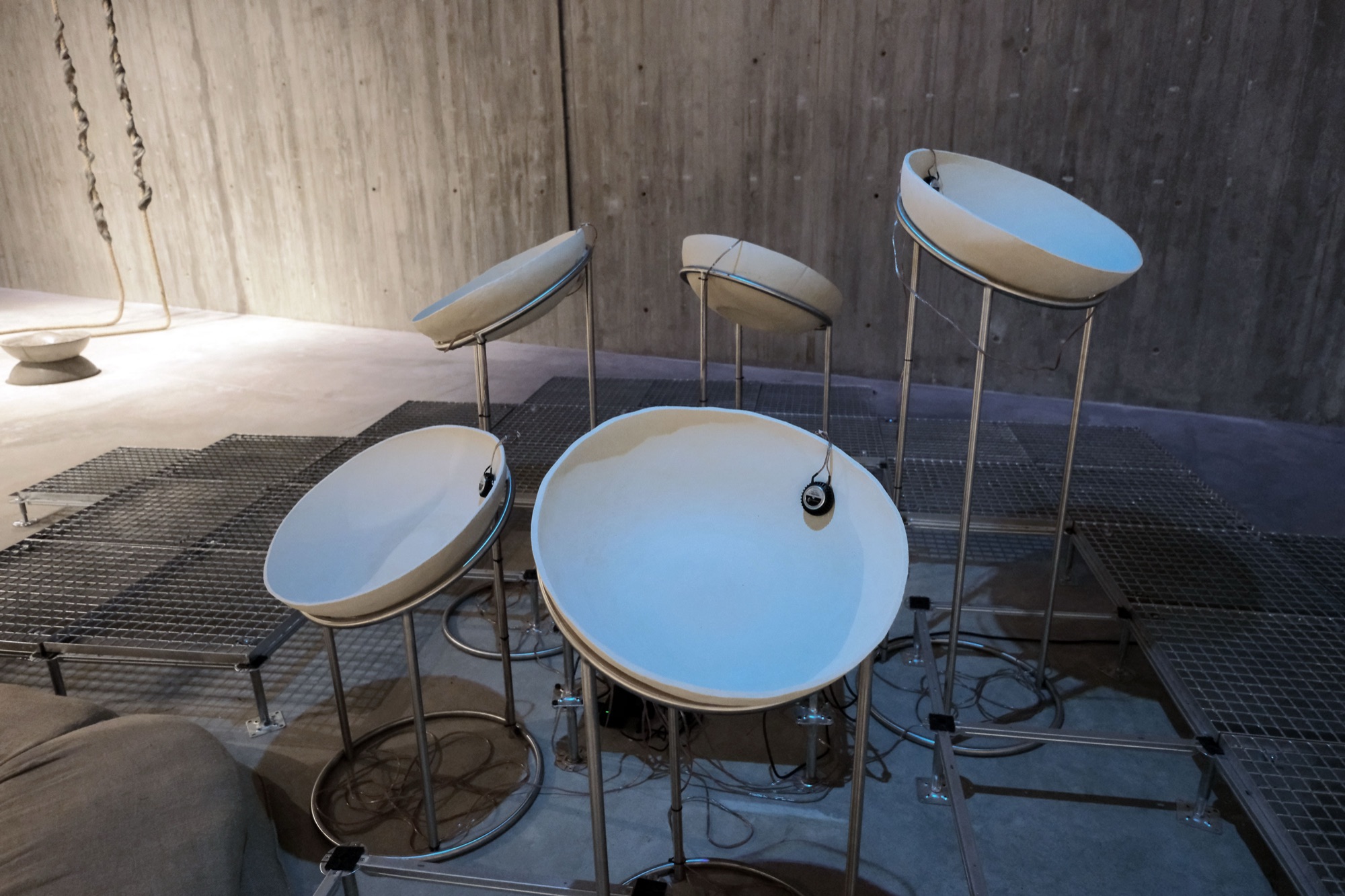
The ceramic bowls within the installation function as acoustic resonators. Custom-developed software continuously connects to publicly accessible archaeological databases, translating states of connection, interruption, latency, and error into sonic parameters. The system also calculates the distance between Troy and the network-resolved location of the data source being accessed, mapping this distance onto the delay and reverberation characteristics of the sound. These variables converge with field recordings gathered from the surrounding region and digitally generated sounds, producing an ever-changing sonic environment that is generated in real time throughout the exhibition and transmitted into the space through the ceramic forms. Clay, water, sound, and data thus converge within the same system of circulation.
The title leaves the notion of the “source” deliberately open, extending it from the provenance of an archaeological object to the origins of information and data. Source Unknown proposes excavation as a process that begins beneath the ground and continues within digital space, reminding us that an object’s journey does not end once it reaches the surface. Continuously reformatted, fragmented, multiplied, and redistributed between physical and digital environments, archaeological material enters into a movement that intersects with the advancing, receding, and returning rhythm of Medcezir; with each circulation, it accumulates new layers of meaning and memory.
- Year
- 2026
- Medium
- Metal grating panels, raised floor pedestals, steel stands, ceramic bowls, transducers (exciters), sound card, open-frame computer, display, wireless modem/router, amplifier modules, and cables
Dimensions variable - Sound Programming and Composition
- Neval Tarım
- Commissioned by
- 10th Çanakkale Biennial “Medcezir”, Troy Museum, 2026
- Curator
- Yasemin Ülgen
- Supported by
- SAHA Association